
Our story
Three generations.
One kitchen.No shortcuts.
Our grandfather believed a sweet shop is judged on one thing: whether the chhena was made that morning. Fifty years in the Kathmandu Valley have not given us a reason to disagree with him.
Every morning, milk arrives at Balaju before six. It is split, drained and kneaded by hand — not because machines can't do it, but because you can feel when chhena is ready in a way you cannot measure.
From there it becomes rasgulla, sandesh, or whatever the day calls for. The syrup takes four hours; we don't rush it. What doesn't sell by evening does not go back on the counter the next day. That is expensive, and it is the whole point.
We came to Kathmandu with Bengali recipes and stayed for fifty years. The Valley taught us its own calendar — Dashain, Tihar, the wedding months — and we build the year around it. Twelve counters now, one kitchen, and the same argument we started with.
0
Years in the Valley
0+
Litres of milk a day
0
Counters supplied
0%
Sold the following day
The long version
How we got here
1974
A single counter on New Road
Nemai Chandra Sen arrives in Kathmandu from Kolkata with a family recipe and very little else. He sets chhena in the back room and sells rasgulla from a glass case out front.
1986
The second counter
Durbar Marg opens — the first shop with tables, where people could sit down with a plate of sandesh and a cup of tea.
1998
The next generation
Nemai’s son takes over the kitchen. Nothing about the method changes; the quantities triple.
2008
The Balaju kitchen
Production moves out of the shops into a dedicated kitchen, so every counter gets the same sweet, made the same way, the same morning.
2016
Across the Valley
Lalitpur and Bhaktapur counters open. Twice-daily delivery runs begin — the system the business still runs on.
2024
Every batch, traced
The kitchen goes fully digital: every tray traced from the milk it came from to the counter it sold at. The technology changed. The chhena did not.
What we hold to
Four rules we have never broken
They are not marketing. They are the reason the business is smaller and slower than it could have been.

One kitchen, always
We have never let a counter make its own sweets. The moment you do, you have two standards instead of one.

Hands over machines
Chhena is kneaded by hand because readiness is a feel, not a number. Everything downstream depends on getting it right.

Time is an ingredient
Four hours in syrup, no exceptions. The cost of waiting is real and we pay it every single day.

Nothing sold twice
What does not sell by evening never returns to the counter. It is expensive, and it is the entire point.
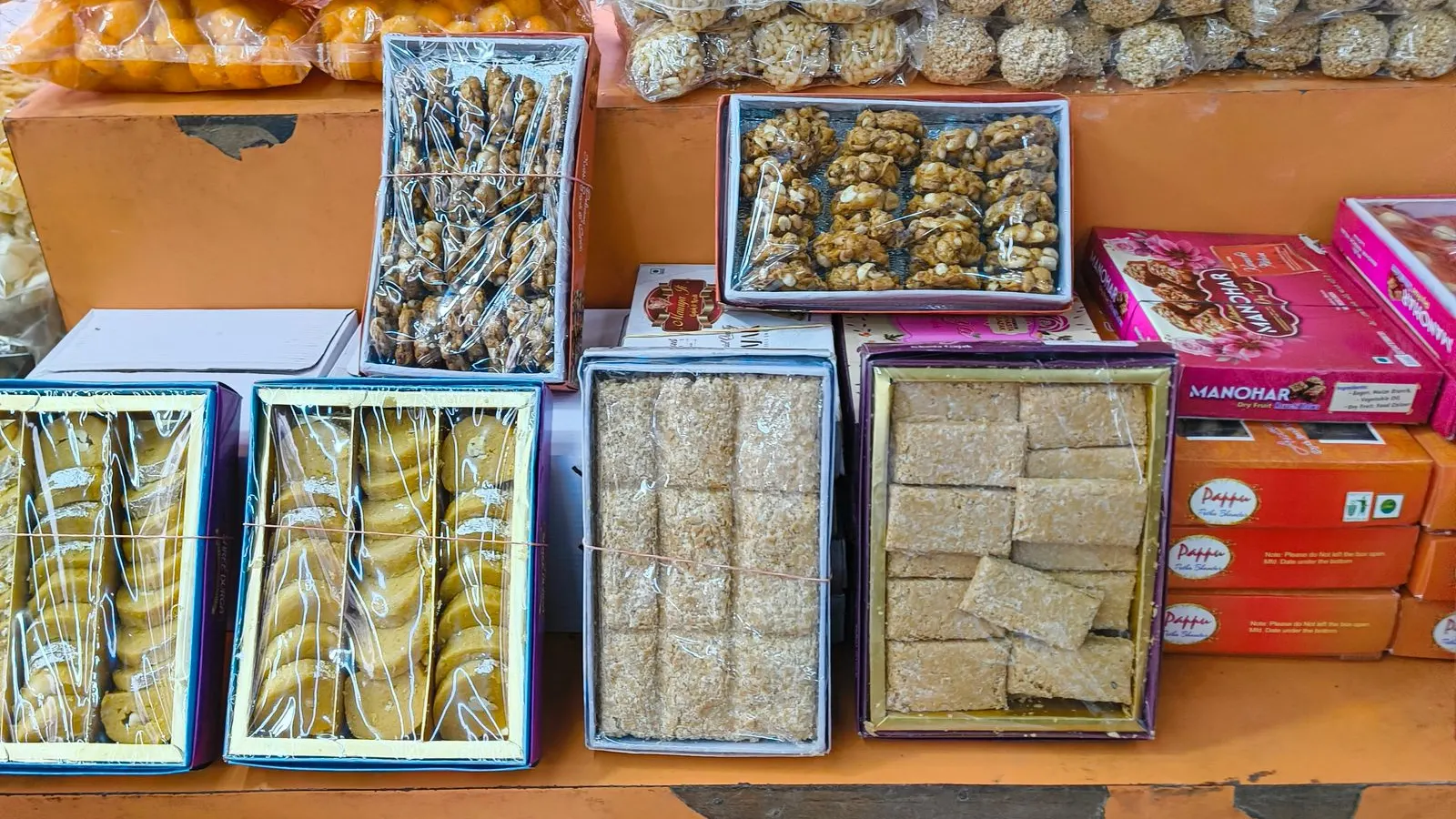
Balaju, today
A kitchen that knows where everything went
Every tray carries a batch number. We know which morning's milk it came from, which counter it went to, and what time it got there — so when something is not right, we can find it in minutes rather than guessing.
- Every batch traced from milk to counter
- Cold chain maintained on both delivery runs
- Daily stock reconciled against what each counter sold
- Unsold stock recorded, removed and never re-sold
Come and taste the difference
Or don't take our word for it — buy one rasgulla and decide for yourself.